Hydroponic Bucket Systems | GrowBuckets
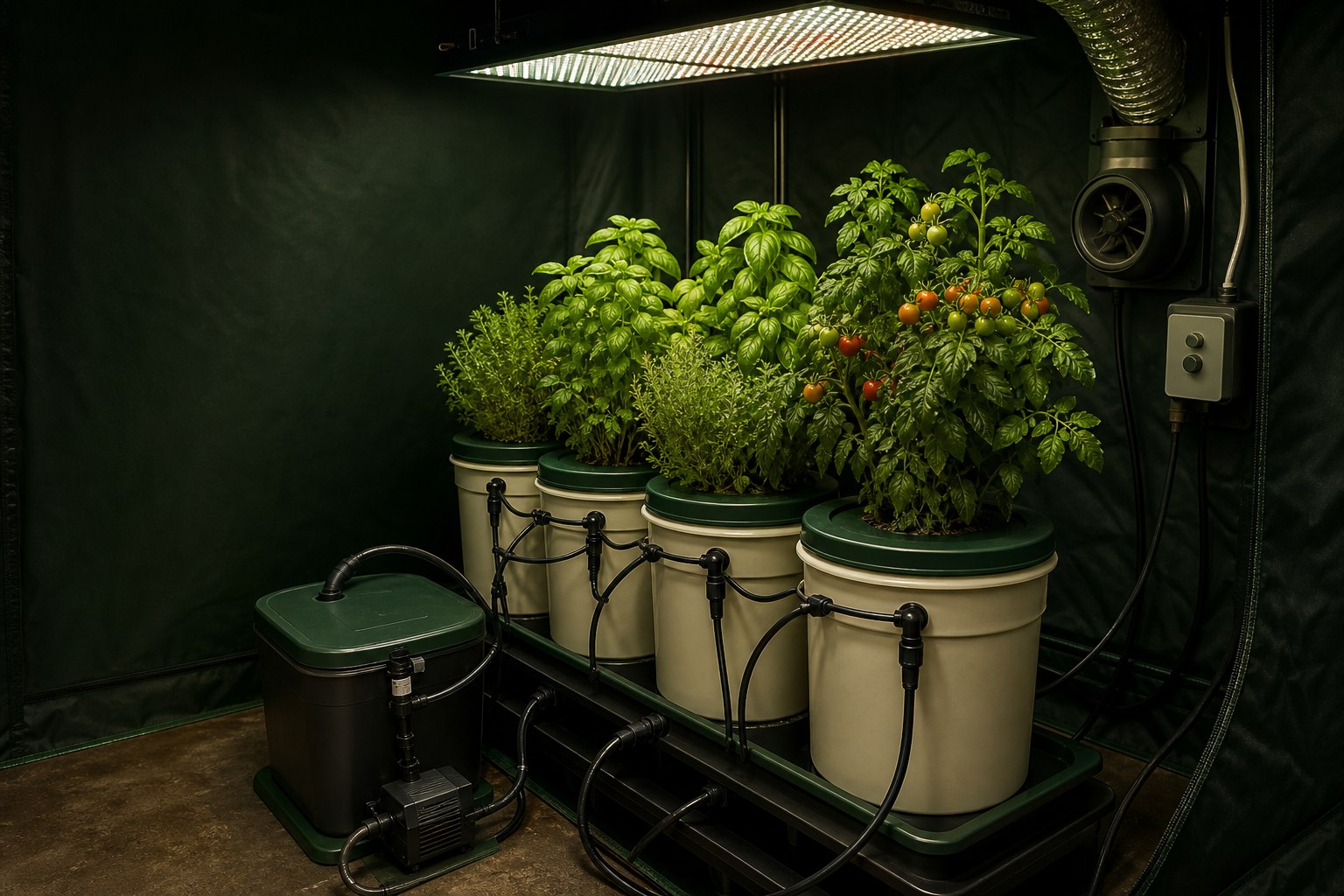
Indoor hydroponic bucket garden with plants and supporting equipment
Products / Hydroponic systems

Choose the operating pattern first

Hydroponic bucket systems

Compare the water path, weekly routine, room footprint, and supporting equipment before choosing a kit.Compare one bucket with four

Quick orientation

A bucket system is the root-zone machine—not just a bucket.

DWC holds roots in aerated solution. RDWC connects sites through circulating water. Ebb and flow cycles solution in and out. Drip delivers through emitters. The right choice starts with the routine and room you can support.

Seven useful paths

Follow the water before comparing features.

01

Single-bucket DWC

One plant site sits over one continuously aerated reservoir.

Best fit
First builds, compact rooms, independent experiments
Routine
Check one water level, one root zone, and one air path
Expansion
Add independent sites or redesign around a connected system
Space
Small footprint with clear lid access
Usually needed
Bucket, lid/net pot, air pump, tubing, diffuser, meter
02

Multi-bucket DWC

Several independent DWC buckets repeat the same water-culture pattern.

Best fit
Growers who want separate root zones
Routine
Observe and service each reservoir
Expansion
Flexible site-by-site growth, with repeated maintenance
Space
Bucket footprint plus access to every lid
Usually needed
Buckets, distributed aeration, tubing, diffusers, meters
03

RDWC

A pump circulates solution through connected plant sites and a shared control reservoir.

Best fit
Larger coordinated layouts
Routine
Inspect circulation, levels, returns, roots, and connections
Expansion
Planned around pump capacity and plumbing
Space
Plant sites plus controller, reservoir, and service aisle
Usually needed
Buckets, reservoir, water pump, air path, plumbing, controls
04

Ebb-and-flow buckets

A timed pump floods root modules and returns solution to a reservoir.

Best fit
Growers who prefer a cycling root zone
Routine
Observe fill, drain, timer, return, and reservoir
Expansion
System-specific modules and plumbing
Space
Sites plus reservoir/controller and return path
Usually needed
Modules, reservoir, controller, pump, timer, plumbing
05

Drip bucket systems

A pump delivers solution to each site through drip lines; runoff is captured or drained.

Best fit
Media-based growing with controlled delivery
Routine
Check emitters, runoff, pump, reservoir, and salt buildup
Expansion
Add sites only within pump and distribution capacity
Space
Buckets plus reservoir, drain, and line routing
Usually needed
Media buckets, reservoir, pump, emitters, lines, drainage
06

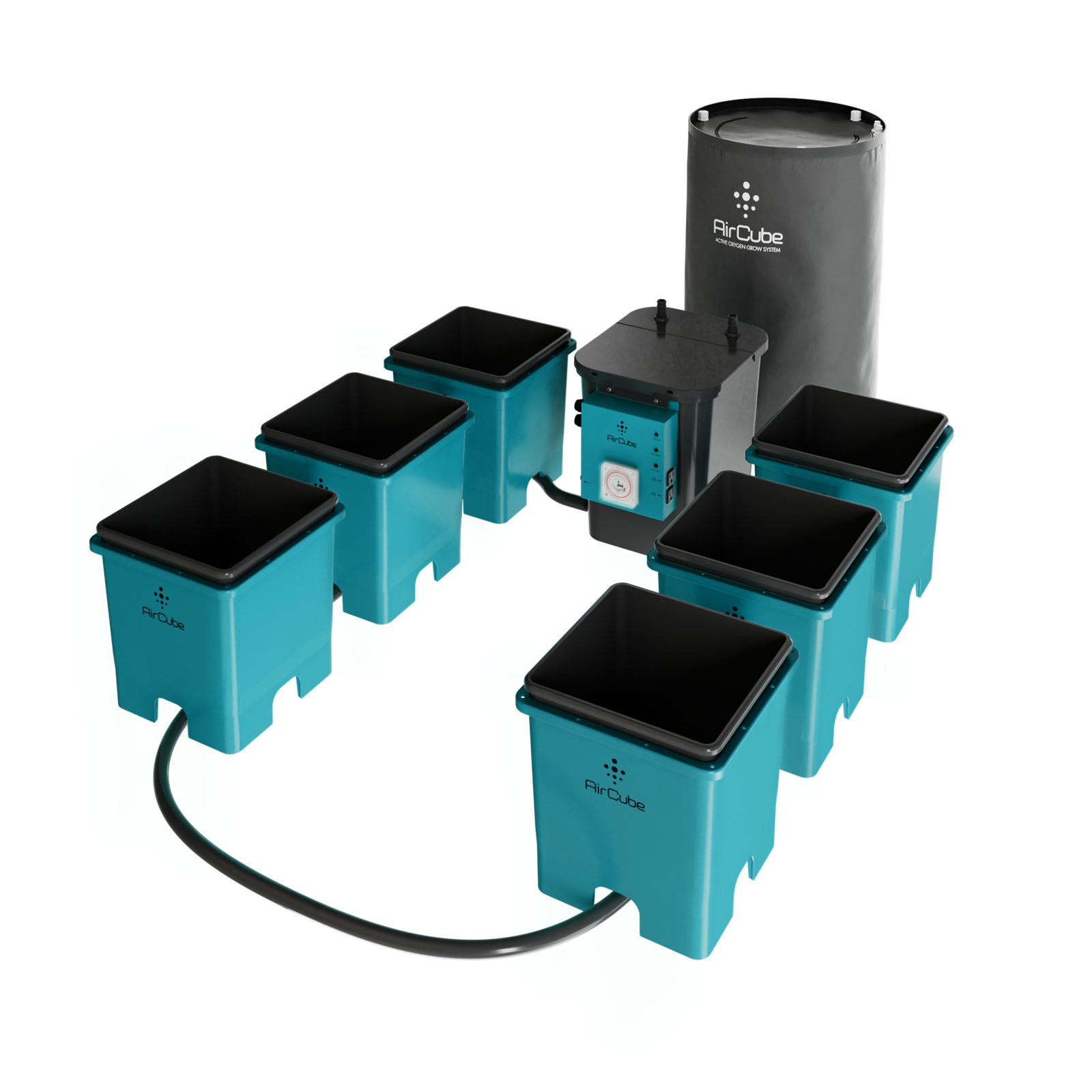
AirCube systems

A controller coordinates bottom-fed ebb-and-flow cycles across several grow modules.

Best fit
Multi-site rooms with a dedicated reservoir and service zone
Routine
Inspect controller, reservoir, supply, return, and each site
Expansion
Follow the product family and controller limits
Space
Full installed system—not grow modules alone
Usually needed
Grow modules, controller, reservoir, pump, plumbing
07

DIY and retrofit

Components are combined or adapted around a measured operating plan.

Best fit
Experienced builders and future projects
Routine
Depends on the exact water, air, drain, and failure paths
Expansion
Highly flexible when every component is respecified
Space
Must be drawn from the complete assembly
Usually needed
Containers, fittings, pumps, controls, monitoring, containment

Published examples

See how real products fill different jobs.

Supporting equipment appears beside systems because pumps and meters are part of the operating plan—not afterthoughts.

Plan the complete setup

Read only the guide that answers your next decision.

Root Spa 1 vs. 4Choose a Root Spa format by routine, space, and expansion plans.Size a DWC air pumpPlan an installed DWC air path without relying on a universal formula.pH vs. PPMUnderstand which water question each meter answers.pH meter careKeep a handheld pH meter dependable without overcomplicating ownership.Plan a 2x4 bucket tentSee how buckets, service access, ventilation, and electrical separation compete for 8 square feet.Size an inline fanTurn tent volume and resistance into a sensible fan-planning range.DWC startup checklistStart a DWC bucket through observable checks instead of an unexplained recipe.